Posts

Buying a Home with a Water Well

Image
  So you've found your dream house, the perfect size in the perfect location.  A beautiful property with scenic views, a large garage and maybe even a pool! But, the property is not connected to municipal water and relies solely on a private water well to supply all the household water needs. No worries; with proper attention, maintenance and inspection, well water can be cheaper and cleaner than city water! Water wells tap into groundwater found deep under the surface, under layers of soil and rock. These layers provide the first round of natural filtration, while also adding a higher mineral content to the water that public water supplies typically have. Well water is considered 'Hard Water', as it contains a higher mineral content than public water, which causes a build up of minerals and scale. A water softening system will remove some of the excess minerals from your groundwater and reduce the amount of scale.  Proper maintenance is the key to keeping your well in go...

Arsenic and Your Water

Image
  Arsenic is a semi-metal element in the periodic table, it is odorless and tasteless, and can enter drinking water supplies from natural deposits in the earth or from agricultural and industrial practices. Arsenic is a metal found in ores of copper, lead and other minerals, and in soil, groundwater and surface water. Arsenic compounds are used in wood preservatives and have been used in commercial pesticides.  Contamination of drinking water may occur if arsenic gets into the surface or groundwater after dissolving from minerals in the ground. It may also occur after the past use of arsenic-containing pesticides and improper waste disposal by smelting operations. Arsenic is one of the inorganic contaminants regulated under the Phase II/V Rules. Under the Arsenic Rule of 2001, the EPA adopted a lower standard for arsenic in drinking water of 10 parts per billion (ppb), which replaced the prior standard of 50 ppb. Non-cancer effects of arsenic can include: Thickening and discol...

So You Need a Well on Your Property, Now What?

Image
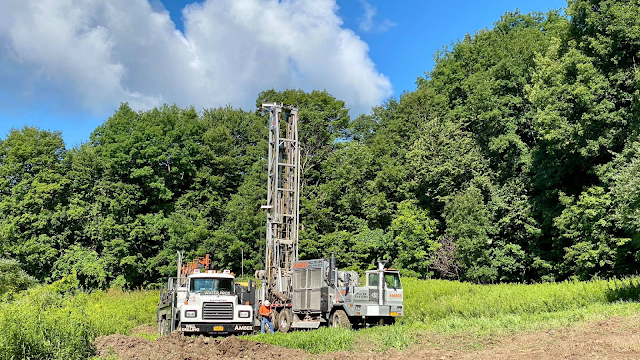
Whether it's an old farmhouse or new construction, some properties are just too far from a town to be connected to a public water supply. Having a well drilled will provide you and your family with a reliable source for clean, potable water. The first step is to choose a location for your well. This should start with a site survey from a licensed drilling contractor. You will need firm and level ground that is at least 50 feet away from your septic tank (and your septic system drain fields should be at least 100 feet away from your well), in an area that is accessible to drilling equipment. This location should be close enough to the house that a pump will not struggle to move the water to the home. Your licensed drilling contractor should be able to give an estimated drilling depth to find water, based on data of existing wells in the area. Please remember that these are just estimates and you will never truly never know where the groundwater level is until it is reached. Next you...

Bottled Water vs. Tap Water

Image
  Is there a large difference between tap water and bottled water? Let’s take a look at some of the differences! When it comes down to the molecules, water is water. The important question is what contaminants are in the water you are drinking? The majority of water that we use for drinking comes from underground wells and lakes and rivers. This water is then treated, either by a municipality or by a private company. Municipal water is what most people have running in their homes. People refer to the water coming from their faucet as “tap water”. This is true regardless of whether the water is treated by your local municipality or privately at home. Now, it us usually assumed that bottled water is of a higher quality than tap water. However, it is estimated that up to 30% of bottled water is really just bottled tap water with no further treatment added. Tap water is typically thought to be less pure than municipal water. To an extent, this is true, as all tap water will have co...

How Often Should A Water Softener Regenerate?

Image
  What is water softener regeneration? Water is a solvent. That means water is very good at breaking down things like minerals, which it then carries within itself. The amount of minerals in water is known as its hardness. High mineral levels means your water is hard while low mineral levels is soft water. A water softener system removes minerals from water so that you have soft water. A popular water treatment system is the ion exchange system. This system runs water over resin, typically made from sodium chloride, to attract and remove minerals from your water. Regeneration is the process of flushing these minerals from the resin so that it can continue to remove minerals from water. This is done by using salt, which must be replenished regularly by the system’s owner. How often should it regenerate? Broadly speaking, a water softener will regenerate as frequent as multiple times a day to every two or three days. The more often the softener regenerates, the less minerals ...

Most Common Water Quality Issues in New York State

Image
  A water treatment system may be just what you need to solve these problems with your water.   Storm Water Runoff Runoff from storms can carry a number of contaminants into drinking water sources. Pollutants form vehicles, chemicals, and other substances that remain on the surface of the ground are picked up and carried by the water. This is especially true for those with shallow wells or who live near urban settings.   Storm runoff also includes runoff from snow melting, which carries road salt. Iron Staining                 Water can be very good at dissolving material given the right conditions. Over time, groundwater can even dissolve iron and carry it into your drinking water. In high enough dosages, iron can cause orange or black staining on almost anything it comes in contact with. This includes clothes, water fixtures, sinks, tubs, and toilets. It can also leave a metallic aftert...

The Difference Between Dug, Driven, and Drilled Wells.

Image
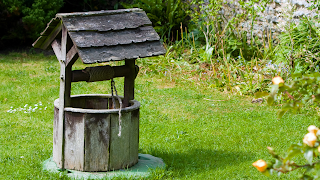
  If you have a private water well for drinking water, then it falls into one of these three types: dug, driven, or drilled. Take a look at what the difference between these wells are, and some key things you should know about them.   Dug Wells Dug wells are dug by shovel or backhoe before being lined with a casing to prevent the well from collapsing. This casing is typically made of stone, brick, or tile, but other materials can be used. These wells have a much wider diameter than the other two and are relatively shallow in comparison, stopping around 30 feet deep. These are what you likely imagine an old well looks like, with a bucket and rope or chain used to draw water. These wells work by digging below the water table so that the well is filled to the same level as the water table. Dig deeper and the well will completely fill or even overflow. Driven Wells Driven wells are created by driving pipe into the ground, ending around 50 feet deep. These wells are cased...

Tips for Maintaining Your Well This Fall

Image
Tomorrow is the first day of fall! To celebrate the change of the seasons, let’s look at what steps you can take to keep your well maintained this fall. 1.Keep Your Well Cap Clear of Debris  Remove any physical debris from around your well. Leaves, twigs, branches or anything else that can obstruct your well cap should be cleared away. This is a great chance to also check the well cap itself for signs of deterioration 2.Prep Your Well For Winter Make sure any exposed pipe that runs through non-heated space is insulated against the cold. Foam pipe insulation is a popular choice for its ease of use. 3. Yearly Service This is also a great time to have your system checked for any issues. Many mechanical problems in your water system will become worse in winter. The cold and snow can also make it more difficult to solve these issues. If you have not had your annual service yet, get it scheduled before snow falls. That is it! Follow these three steps and you are ready to go for the...

How Deep Does a Well Need To Be?

Image
  Many people ask how deep their well should be. After all if there is water at 30 feet, shouldn’t we stop drilling? Let's find out.   How deep should a water well be? According to the Water Systems Council’s Wellcare program, the average consumer water well ranges between 100 and 800 feet, but some do reach over 1,000 feet deep. The purpose of drilling a water well is to find water, but there several things to consider when drilling. 1.       Contaminants There may be water very shallow under the surface. The issue with this is there may be any number of contaminants from the surface accessing that water. Road salt, car exhaust, or anything else may seep into that water. Also, in times of drought, a shallow well is more likely to run dry. 2.       What Is In The Ground When drilling, a contractor can go through several different layers of soil before hitting bedrock. There may be water available at a relatively shallow layer of soil, ...

Home Water Treatment System

Image
  So you had your well water tested and need a water filtration or treatment system. What do you need to know about choosing a water treatment system?   What water treatment system you need depends on what is in your water. Systems are created to filter out specific material or chemicals such as minerals or heavy metals. Even if you clearly have sediment in your water, you should have it tested so you know exactly what and how much material is in your water. With that being said let’s look at some common water treatment systems. Ion exchange System Ion exchange systems use resin to replace either cations or anions with sodium ions and chloride ions. They typically use sodium chloride to provide these ions. This neutralizes the water. Salt brine is then used to recharge the water. Ion exchange systems can be used to soften water and remove certain chemicals depending on the resin used. Water Filtration Systems Water filtration systems are used to remove particulates...

Is it Time To Get Your Well Water Tested?

Image
Is it Time To Get Your Well Water Tested? In last week’s blog post about what to know about your well, we learned that well water should be tested at least once a year. In today’s post we are looking at signs that you should get your water tested sooner rather than later.   The number one way you know it’s time to get your water tested is if it has been a year or more since it was last tested. Well water should be tested at least once every year. This should align with having your water system reviewed and serviced each year. Now let’s look at some other reasons. Visual or taste difference in water If there is a sudden difference in how your water looks or tastes, then you should have your system looked at and water tested. Problems in well water usually take a long period of time to become noticeable. If there us a sudden change, that might indicate a a significant breakdown in your water system. Heavy rainfall or extreme weather If there has been flooding from heavy...

Owning A Home With A Well

Image
  What's that boy? There’s a well in the backyard! Here’s everything you need to know about water wells, before you close on your house.   In 2015 it was estimated that 42 Million people in the United States used wells for their home’s   water supply. A great majority of these homes are located in the north east, so it should be no surprise to you if you move to a house and find it uses well water. Well, no pun intended, this is your guide to what to look out for when you are interested in buying a home that has a well. How Does It Work? If you remember in high school learning about the water cycle, then you know that a good portion of water from runoff, lakes, rivers, rain, and snow all soak into the ground. This excess water that is not absorbed by plants will pool together deep in the ground. You can access this water by drilling deep enough. The hole has a metal tube placed in it called a casing that stops the ground from collapsing in on itself. Now, unless y...

Troubleshooting A Dry Well

Image
  You reach to turn on your shower faucet, waiting for the soothing hot water to prepare you for the day ahead. You wait. And wait. And wait. Nothing. You turn to the sink and find the same thing. No water! Is your well dried up, or has your pumped failed? Let’s find out! First lets look at some warning signs that you may have a dry well. Dry Well Warning Signs • Your faucet is sputtering more often than normal • Your water appears murky or muddy • Lower water pressure than normal • Pump runs longer than usual • Water well recovery takes ridiculously long to recover after heavy usage • Your neighbors are having similar struggles If you begin having these issues with your water then you may have a dry well. But before you call us, here are some things you can do to troubleshoot your water well and pump. 1. Is it plugged in? Seriously though, check that your pump is receiving power. Especially after being serviced, the pump may be unplugged, or an electrical overload ...

Homeowner Well Grant

Image
Need a new well, but don't have the cash? You may be able to drill your well for free with thi s grant. Homeowner Well Grant N ew York State has a grant through the office of Community Renewal that allows for low-income homeowners to install a new well as as well as some other benefits too. It's called the Community and Development Block Grant (CDBG). Eligible applicants will receive up to $500,000 to use on installing a new well, replacing a septic system, or decommissioning a septic system. The grant is meant for low income homeowners living in cities, towns, and villages with a population under 50,000 and counties under 200,000. You can check if your home is in an accepted location here .     Those who think they qualify must go through a five step application process by 4:00 PM on August 25th to be accepted. You can find everything you need to apply on hcr.ny.gov . Keep reading to learn how to apply.     The application process is as follows:  Step 1 – Compl...

3 Benefits of Geothermal Wells

Image
Geothermal energy harnesses subterranean temperatures through a well for heating and cooling purposes.  Here's Why You Should Consider a Geothermal Well 1. Clean Energy The Earth naturally generates the energy your geothermal system needs, so this means no fossil fuels are burned during the process. Also, these systems aren’t dependent on the electrical grid, so they won't create carbon monoxide or toxic byproducts that contribute to climate change. Instead, well drilling professionals will install underground pipes that circulate water between your home and the soil. Depending on the season, the water will collect heat from your home or the soil, which helps regulate indoor temperatures. Best part of all this, is you will never run out energy, as the Earth is always producing it. 2. Increased Savings These eco-friendly systems have low operating costs, meaning they'll eventually pay for themselves with all the money you will be saving. You won't have to pay any munici...

3 Common Misconceptions About Water Wells

Image
A private water well is ideally the best solution for homeowners who do not have access to municipal water systems. Modern wells are constructed to provide the most cost-effective and safe supply of water to your home for drinking, cooking, bathing, etc. However, many people are hesitant to install water wells because of common misconceptions about wells these days. Below are these common misconceptions debunked:  1. Municipal Water Is Higher Quality Since well water comes from the ground, many people fear possible contamination of their water source. However, as long as proper testing and filtration are provided, private wells can offer a safer alternative to municipal water. City water often contains chemicals that disinfect and purify the water, which is why well water tastes fresher and cleaner.  2. Private Wells Frequently Dry Up Well contractors drill deep down until they reach the aquifer beneath a property. This in turn supplies homeowners with a steady stream of groun...

Three Signs It's Time for Water Well Repairs

Image
If your home relies on a well to give you clean water year-round, occasional problems might affect its efficiency. Well repairs are often necessary to resolve any unwanted issues. Below are some signs to look for when it's time to contact a well service technician:  1. Weak Pressure  If you have low water pressure in just one faucet, chances are it is usually the plumbing system that needs to be fixed. However, if this problem persists throughout your whole house, it could be due to a water well issue. For example, you could have a leak in your pressure tank, or mechanical seal in your submersible pump has detached itself. A technician might also check your pressure switch, which regulates your pressure and prevents it from going too high or too low.  2. Unusual Noises If your water is making weird noises, it might be time to call a service tech. For example, if an object gets stuck in a well part, it can cause a grinding sound. You might also hear a clicking sound if the...

Current Drought Conditions

Image
With a large portion of our area now under Moderate to Severe Drought conditions, it is important to conserve water. If you are experiencing water interruptions, low flow or unusually dirty or poor water quality, your water supply could be going dry. We're here to help! Call the Amber Water Pros today!

Current Drought Conditions for NYS

Image
Here is a picture of the current drought conditions for NYS (taken from http://droughtmonitor.unl.edu/.../StateDroughtMonitor... ) As you can see, most of NY is in moderate drought conditions right now. Here's what you should know about the negative effects droughts can have on our every day life and water use: 1. The need for water increases, so hay and grain amounts are lower than normal. 2. The production of honey declines. 3. Wildfires increase. 4. Our trees, landscapes and fish become stressed. 5. Reservoirs and lake water levels are lower than normal. Drought giving you water problems? Call the pros today!

*ALERT* Ithaca, NY limiting water use

Image
Ithaca, NY has recently asked their residents to limit their water use due to the latest Central, NY drought conditions. Click here to learn more.  Also, you can view our blog for earlier posts, on ways to help conserve your water!